Question
Environmental Systems and Societies
How can green building design reduce a home's environmental footprint?
Answer
Environmental Systems and Societies
Expert Answer
Green building design reduces a home's environmental footprint by cutting the energy, water and materials it uses over its life. The biggest gains come first from keeping heat in, or out, with insulation and good windows. The energy still needed then comes from clean sources such as heat pumps and solar panels. The scale is large: buildings and construction account for about 32% of global energy use and 34% of CO₂ emissions, according to the UN's Global Status Report for Buildings and Construction 2024/2025.
Use less energy
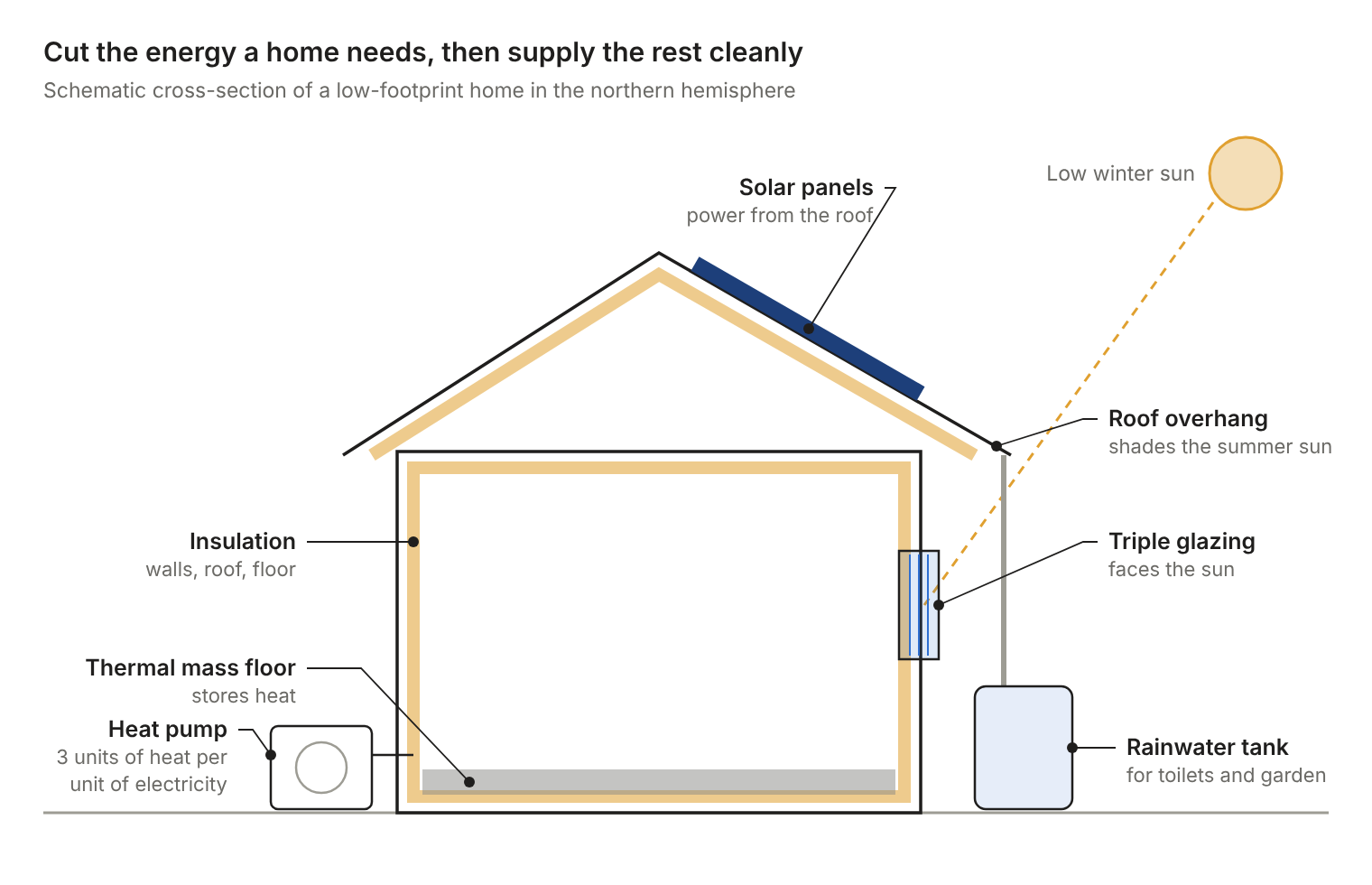
- Insulation in the walls, roof and floor slows the loss of heat in winter and its gain in summer.
- Airtight construction stops draughts. A ventilation system with heat recovery then brings in fresh air while keeping most of the warmth.
- Double or triple glazing cuts heat loss through windows.
- Passive solar design puts large windows on the sunny side of the house, with overhangs that block the high summer sun but let in the low winter sun. Heavy materials such as stone or concrete store that heat and release it at night.
The German Passivhaus standard shows how far this can go: a certified home needs no more than 15 kWh of heating per square metre per year.
Use renewable energy
- Heat pumps move heat from the air or ground into the house, giving about three units of heat for each unit of electricity.
- Solar panels on the roof generate electricity. Solar water heaters warm water directly.
- LED lighting and efficient appliances cut the demand that is left.
Save water
Rainwater tanks collect water from the roof for toilets and gardens. Greywater systems reuse water from showers and sinks. Low-flow taps and dual-flush toilets cut use further.
Choose materials with a smaller footprint
Every building carries "embodied carbon" from making its materials. Cement and steel are especially carbon-heavy. Timber, recycled materials and products made locally have lower footprints. A house built to last, and easy to repair, spreads its embodied carbon over more years.
Work with nature
Green roofs, covered in plants, insulate the building, soak up rainwater and provide habitat. Permeable paving lets rain soak into the ground instead of running into drains. Trees planted on the sunny side shade the house in summer.
Measuring the result
Rating schemes such as BREEAM in the UK and LEED in the US score buildings on energy, water, materials and ecology. A simpler test is the energy bill. A well-designed green home can run on a fraction of the energy of a standard house of the same size.
Bring a real example to the green-architecture question in the ESS HL mock exam paper. Research a named building and explain how its design reduces resource use.
Answered by Revision Village IB Expert
Explore More IB Environmental Systems and Societies Resources
Over 80% of IB students globally are experiencing the power of Revision Village